

Papercraft projects are the ultimate blend of creativity and fun, turning simple sheets of paper into stunning works of art. Whether it’s a whimsical dragon or a delicate flower, these projects invite people to unleash their inner artist without the need for fancy tools or expensive materials. Who knew that a humble piece of paper could spark so much joy and imagination?
Imagine transforming your living room into a gallery of paper masterpieces. It’s not just about crafting; it’s about the thrill of watching your ideas come to life, one fold at a time. Plus, papercraft projects make for perfect stress relief—who can resist the charm of snipping, folding, and gluing their way to relaxation? Dive into the world of papercraft and discover how this delightful hobby can add a touch of whimsy and creativity to everyday life.
Overview of Papercraft Projects
Papercraft projects invite creativity by transforming paper into various artistic forms. These projects promote accessibility and imaginative expression while providing relaxing therapeutic benefits.
Definition of Papercraft
Papercraft refers to the art of creating three-dimensional objects using paper. Individuals utilize techniques like folding, cutting, and gluing to produce unique designs. Projects can range from simple models like paper airplanes to intricate sculptures. Various paper types, including cardstock and origami paper, enhance these creations. Artists apply this craft in multiple ways, including decor, toys, and educational tools. It’s characterized by its flexibility and creativity, allowing anyone to engage, regardless of skill level.
History of Papercraft
Papercraft has roots tracing back to 1st-century China, where paper originated. Early uses included simple religious and ceremonial items, evolving into complex designs over centuries. By the 17th century, Japanese origami gained prominence, emphasizing artistry in folding. The 20th century marked a shift with the introduction of printed models. These printed templates led to widespread popularity in the crafting community. Today, papercraft spans digital and traditional methods, captivating hobbyists worldwide. Evolution from basic forms to sophisticated designs showcases the craft’s growth and adaptability throughout history.
Types of Papercraft Projects
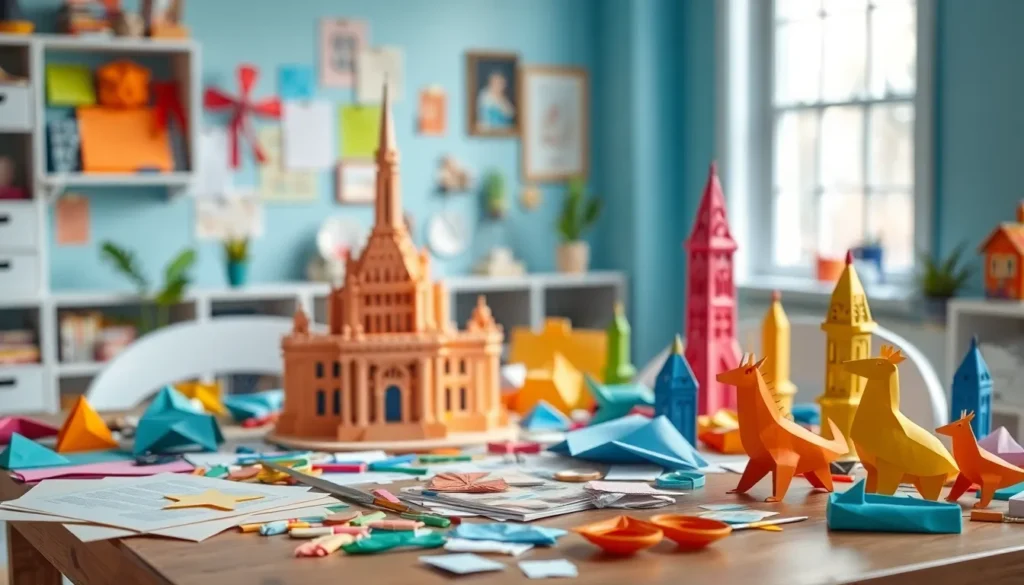
Papercraft projects come in various forms, each offering unique creative outlets. These types include origami, paper models, and papier-mâché, showcasing diverse techniques and artistic expressions.
Origami
Origami focuses on folding paper into intricate designs without the need for cutting. This ancient art form, originating from Japan, involves creating shapes ranging from simple cranes to complex architectural structures. Many enthusiasts appreciate its meditative qualities as they concentrate on each precise fold. Traditional origami emphasizes specific techniques that create beautiful sculptures, while contemporary designs often incorporate artistic flair and experimentation with colors and patterns.
Paper Models
Paper models involve constructing three-dimensional representations of objects, often using printed templates or construction sheets. These models can replicate architectural buildings, vehicles, or even characters from popular culture. Crafting paper models typically requires cutting, folding, and gluing for assembly. Hobbyists often find satisfaction in building intricate pieces that reflect their interests or passions. Some resources provide advanced challenges for those seeking to enhance their modeling skills or pursue larger-scale projects.
Paper Mache
Papier-mâché employs a technique of layering paper and adhesive substances to form durable objects. Used for creating sculptures, masks, or decorative items, this method allows for creativity and experimentation. Artists often combine various papers, like newspaper or tissue, for colorful and dynamic textures. The mixture of glue or paste acts as a bonding agent, ensuring the stability of the final product. Many appreciate this craft for its versatility and potential to recycle materials, turning everyday items into artistic treasures.
Benefits of Papercraft Projects
Papercraft projects offer numerous advantages that foster growth and enjoyment among enthusiasts.
Enhancing Creativity
Engaging with papercraft sparks innovation by allowing individuals to explore various designs and projects. Experimenting with colors, shapes, and patterns encourages unique artistic expressions. Each project becomes a canvas for imagination, pushing creative boundaries. Many hobbyists discover new techniques that enhance their crafting repertoire. Ideas transform into tangible objects, stimulating both visual and tactile creativity.
Improving Fine Motor Skills
Working with paper demands precision, thus helping to develop fine motor skills. Cutting, folding, and gluing requires careful hand-eye coordination. These actions strengthen dexterity and improve overall control. Many find that regular practice leads to increased confidence in handling small tools and materials. Enhancements in these skills also transfer to other activities, making day-to-day tasks more manageable.
Promoting Relaxation
Creating papercraft serves as a therapeutic escape from daily stresses. The repetitive motions of folding and cutting can induce a calming state of focus. Many users report feelings of serenity while immersed in their projects. This hobby provides an opportunity to disconnect from technology and breathe, fostering mindfulness. Research indicates that such creative activities contribute to reduced anxiety and improved mental well-being.
Getting Started with Papercraft Projects
Diving into papercraft projects opens a world of creativity and fun. With just a few materials and techniques, anyone can create stunning paper creations.
Necessary Materials
Basic tools include scissors, craft knives, cutting mats, and adhesives like glue or tape. Quality paper options vary from cardstock to specialty papers, each offering unique textures and weights. A ruler ensures precise measurements while a pencil aids in marking cut lines. For beginners, printable templates simplify the process, allowing for easier assembly. Consider gathering a large workspace, as ample room accommodates projects of all sizes.
Basic Techniques and Tips
Folding techniques form the foundation of successful papercrafting. Start with valley and mountain folds, which create the structure of many designs. Cutting should be precise, following guidelines meticulously to achieve clean edges. Gluing demands attention, ensuring even application for lasting results. Take time to practice with small projects before tackling larger ones. Experimentation enhances skills, so try mixing colors and patterns. Last, patience cultivates improvements, allowing for creativity to flourish in each creation.
Papercraft projects offer a delightful way to unleash creativity while providing therapeutic benefits. This accessible hobby encourages individuals to explore their artistic potential with minimal materials and tools. Whether it’s folding intricate origami or constructing detailed paper models, each project allows for personal expression and skill development.
Engaging in papercrafting not only enhances fine motor skills but also fosters mindfulness and relaxation. As hobbyists dive into this craft, they discover the joy of transforming simple paper into unique works of art. With endless possibilities and a rich history, papercraft continues to inspire creativity across generations.