

Woodworking isn’t just a hobby; it’s a journey into a world where creativity meets craftsmanship. For those who’ve mastered the basics, intermediate woodworking opens up a treasure chest of possibilities. Imagine transforming a simple plank into a stunning piece of furniture that’ll make your friends think you’ve got a secret woodworking wizard on speed dial.
Overview of Intermediate Woodworking
Intermediate woodworking involves a deeper understanding of techniques and design. It enables woodworkers to transform concepts into tangible projects.
Definition and Skills Required
Intermediate woodworking refers to the level where individuals apply more complex methods. Familiarity with joint types such as dovetails and mortise and tenon is essential. Mastery of tools beyond the basics expands one’s abilities. Problem-solving skills play a crucial role when facing design challenges. Creativity comes into play as woodworkers begin to develop their personal style. Experience with different wood species enhances the quality of projects. Understanding measurements and proportions ensures accuracy in builds.
Tools and Materials Used
Tools vary significantly at the intermediate level. Table saws provide precision for cutting larger pieces. Routers help in adding decorative edges and details. Chisels become necessary for intricate joinery. Sanders smooth surfaces, preparing them for finishing. Hand tools like planes and coping saws offer traditional methods for shaping wood. A variety of wood species, including oak and cherry, provide aesthetics and durability. Selecting the right finishes, from stains to sealants, enhances the final look and longevity.
Techniques in Intermediate Woodworking
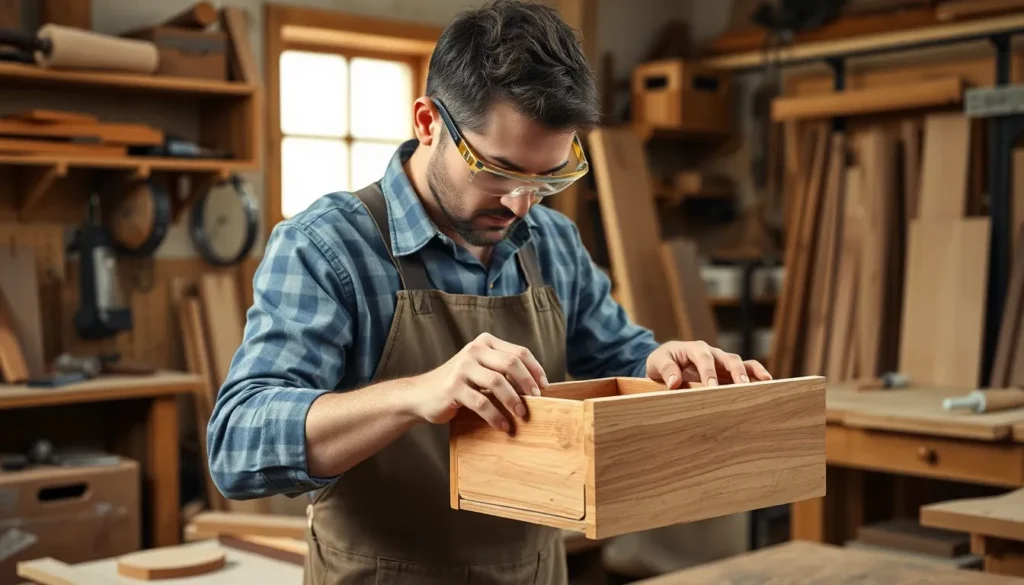
Intermediate woodworking encompasses a variety of techniques that enhance skill and creativity. Mastering these methods enables woodworkers to produce high-quality, handcrafted items.
Joinery Methods
Joinery methods represent critical techniques in intermediate woodworking. Dovetail joints provide strong connections, particularly in drawer construction. Mortise and tenon joints enhance leg-to-rail connections in tables and frames. Box joints appeal for their aesthetic and structural integrity. Depending on the project, selecting the appropriate joint type ensures overall stability. Additionally, mastering cutting and fitting techniques for these joints increases craftsmanship. Knowledge of both hand tools and power tools aids in achieving precision. Ultimately, understanding these joinery methods expands the possibilities of furniture creation.
Finishing Techniques
Finishing techniques play a vital role in achieving professional-quality results. Stains allow woodworkers to enhance natural grain patterns with color. Clear finishes, such as varnishes and lacquers, provide protection while improving appearance. Applying finishes requires careful preparation that includes sanding and cleaning surfaces thoroughly. Brushing, spraying, or wiping finishes onto the project creates different effects. Diverse finishing methods influence not only aesthetics but also durability against wear. Experimenting with different products helps woodworkers discover their preferred outcomes. Ultimately, mastering finishing techniques completes the woodworking process and showcases the artistry involved.
Projects for Intermediate Woodworkers
Intermediate woodworkers can tackle a variety of exciting projects that range from functional pieces to artistic displays. Creating unique items not only showcases skill but also encourages further growth in woodworking mastery.
Furniture Making
Intermediate woodworkers often choose furniture projects that challenge their skills and showcase their creativity. Building items such as bookshelves, coffee tables, or dining tables allows for the application of complex joinery techniques like dovetails and mortise and tenon. Each of these techniques adds structural integrity and visual appeal. Experimenting with different wood species provides opportunities to explore textures and colors. Additionally, varying finishing methods enhances the appearance and durability of each finished piece.
Home Decor Items
Home decor projects also attract intermediate woodworkers eager to enhance their surroundings. Items like picture frames, wall shelves, and decorative boxes serve both aesthetic and functional purposes. Each project encourages exploration of design principles while applying intricate joinery and precise measurements. Incorporating personalized touches, such as custom carvings or inlays, allows for self-expression. Choosing complementary finishes highlights the beauty of the wood and elevates the overall presentation. These decor items reflect skill refinement while providing unique additions to any space.
Common Challenges and Solutions
Intermediate woodworking presents various challenges despite an individual’s increased skill level. Understanding these obstacles helps woodworkers navigate their creative journeys effectively.
Common Mistakes
Woodworkers often miscalculate measurements, leading to pieces that do not fit together properly. Incorrect joint choices can weaken structures, affecting overall durability. Many neglect proper tool maintenance, resulting in subpar cuts and joinery. Poor finishing techniques might leave surfaces uneven or unattractive. Some struggle with patience during the drying process, applying additional coats of stain or sealant too soon. Lastly, overlooking wood grain patterns can affect aesthetic cohesion and impact the final product’s appearance.
Tips for Overcoming Challenges
Ensure precise measurements by double-checking and using a reliable measuring tape. Select appropriate joints for each project, prioritizing strength and aesthetics. Maintain tools by cleaning and sharpening them regularly, promoting efficiency and accuracy. Utilize consistent finishing techniques, applying even strokes and allowing adequate drying time. Study wood grain patterns before cutting to achieve a visually harmonious finish. Seek feedback from other woodworkers; constructive criticism enhances skills and fosters creativity.
Resources for Further Learning
Woodworkers looking to hone their skills and expand their knowledge can find valuable resources tailored for intermediate woodworking.
Books and Guides
Numerous publications provide in-depth information about woodworking techniques. “The Complete Manual of Woodworking” offers comprehensive guidance on tools, joinery, and finishing. Another excellent resource, “Woodworking Basics: Mastering the Essentials of Craftsmanship,” breaks down essential skills for both beginners and intermediates. Each book features practical projects, step-by-step instructions, and illustrative diagrams to facilitate learning. Various online platforms also sell books and guides, ensuring access to up-to-date information and methodologies.
Online Courses and Communities
Online courses cater to different styles and skill levels, making them accessible for intermediate woodworkers. Websites like Craftsy and Udemy offer specialized classes on joinery techniques and advanced finishing skills. These courses provide curated video content alongside community forums where woodworkers share experiences and ideas. Engaging with communities on platforms like Reddit and Facebook further fosters a sense of belonging. Participating in discussions and seeking feedback from peers enhances the learning experience and cultivates creativity.
Intermediate woodworking opens up a world of creativity and craftsmanship. As woodworkers refine their skills and tackle more complex projects, they not only enhance their technical abilities but also express their unique artistic vision. Mastering joinery techniques and finishing methods transforms raw materials into stunning pieces that can elevate any space.
Facing challenges is part of the journey, but with the right resources and community support, woodworkers can overcome obstacles and continue to grow. Engaging with fellow enthusiasts and exploring advanced techniques ensures a fulfilling experience. Ultimately, intermediate woodworking is about embracing the process and celebrating the artistry involved in creating handcrafted items.